Welcome to the phanTECHNIKUM
Exhibitions
To the program
Special exhibitions at the phanTECHNIKUM
Here you will find all current and future special exhibitions on the history of technology in MV.

Water, air, fire & earth
Events

phanPRANDIUM
Museum Bistro with Fresh Food and Beverages
Hungry from all that wondering? We’re celebrating the grand opening of phanPRANDIUM and can’t wait for you to discover our new museum bistro! Treat yourself to a phantastic lunch or a quick snack, all crafted with love and the finest ingredients – the perfect fuel for your journey through the museum.
Planning your own event? With our new catering options, we’ll make sure everything runs smoothly - guaranteed to keep your guests fully charged!
Your visit
Are you planning a trip to us? Wonderful! Here you will find all the important information about your visit.
Open from Tuesday to Sunday 10 am - 5 pm
Tickets adults 12€ | reduced 8€
phanTECHNIKUM Zum Festplatz 3 | 23966 Wismar

Education & Mediation
The phanTECHNIKUM as a recognized extracurricular place of learning
Whether it's a hiking day or an excursion, a group outing or a team-building activity: discoveries for children, young people and adults at phanTECHNIKUM.
We offer tailor-made discovery tours in the form of museum rallies, general or special guided tours and high-explosive laboratory demonstrations!
You can train your welding skills under electricity or expand your skills in one of our workshops in the technikSCHULE.


Latest news
News from and about the phanTECHNIKUM.
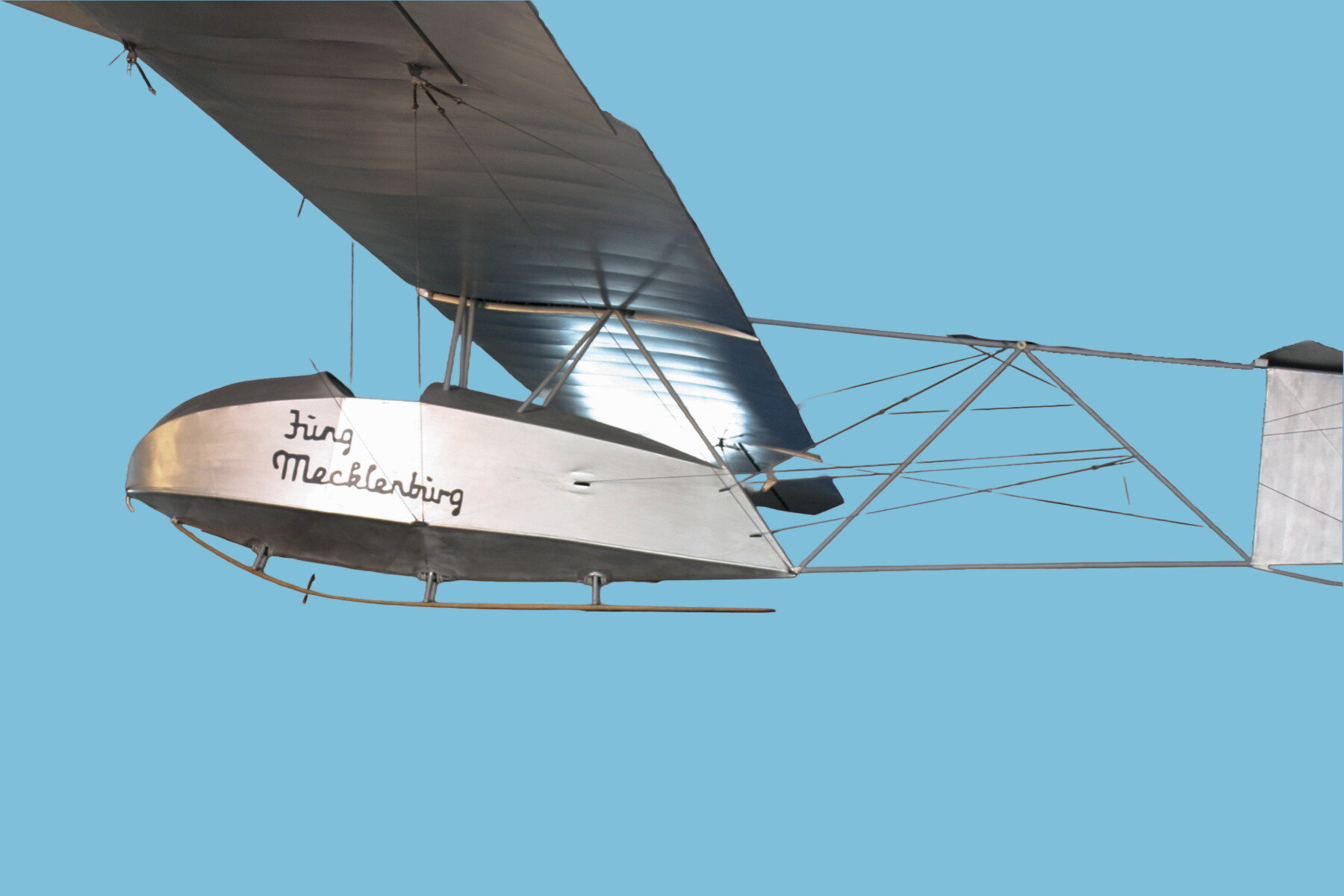
Object of the Month – September 2026
Glider "Jung Mecklenburg"
The 1933 glider „Jung Mecklenburg“ is an eye-catcher in our permanent exhibition. The single-seater aircraft was built by members of the Schwerin Gliding Club under the leadership of Heino Funay – the later engineer and aircraft manufacturer Ludwig Bölkow was also involved. In 1934, Funay flew the aircraft for one hour and eleven minutes, setting a Mecklenburg record in gliding.
In the 1980s, Dr Volker Koos recovered the fuselage and tail unit of the aircraft from a Schwerin attic. Restored and completed in 1994/95, the object was first presented again in 1995 at the regional exhibition „1000 Years of Mecklenburg“ in Güstrow – and continues to delight our visitors young and old to this day.
Follow us on Instagram to discover the Object of the Month and many more fascinating stories from the museum.


Object of the Month – April 2026
Voltmeter
This voltage measuring instrument – commonly referred to as a voltmeter – is used to measure electrical voltage and displays it in the unit volts. The example presented here is not only a technical measuring device, but also a rare testament to regional industrial history. It was manufactured by the Rostock-based company Tischbein & Schwiedeps, which had operated an electrical installation business in Eselföter Straße since 1892 and contributed to the early electrification of Mecklenburg.
The voltmeter was installed in a transformer station built in 1922, the small substation building in Bahnhofstraße 1a in Wittenburg. The building was designed by the government architect Werner Cords from Parchim and still exists today as a listed monument. As early as 1926, Cords presented this functional utility building in a specialist article in the Deutsche Bauzeitung.
With the decommissioning of the substation in 1960, its technical use came to an end – but not the story of the voltmeter. The switchboard was removed, the device taken out, and it began an unusual “second life”: a neighbouring boy incorporated it into his imaginative childhood world, turning it into part of a ship’s bridge in his playroom.
In 2024, he donated this piece of Mecklenburg’s technical history – which had travelled far in his imagination – to our museum.
Follow us on Instagram to discover the Object of the Month and many more fascinating stories from the museum.

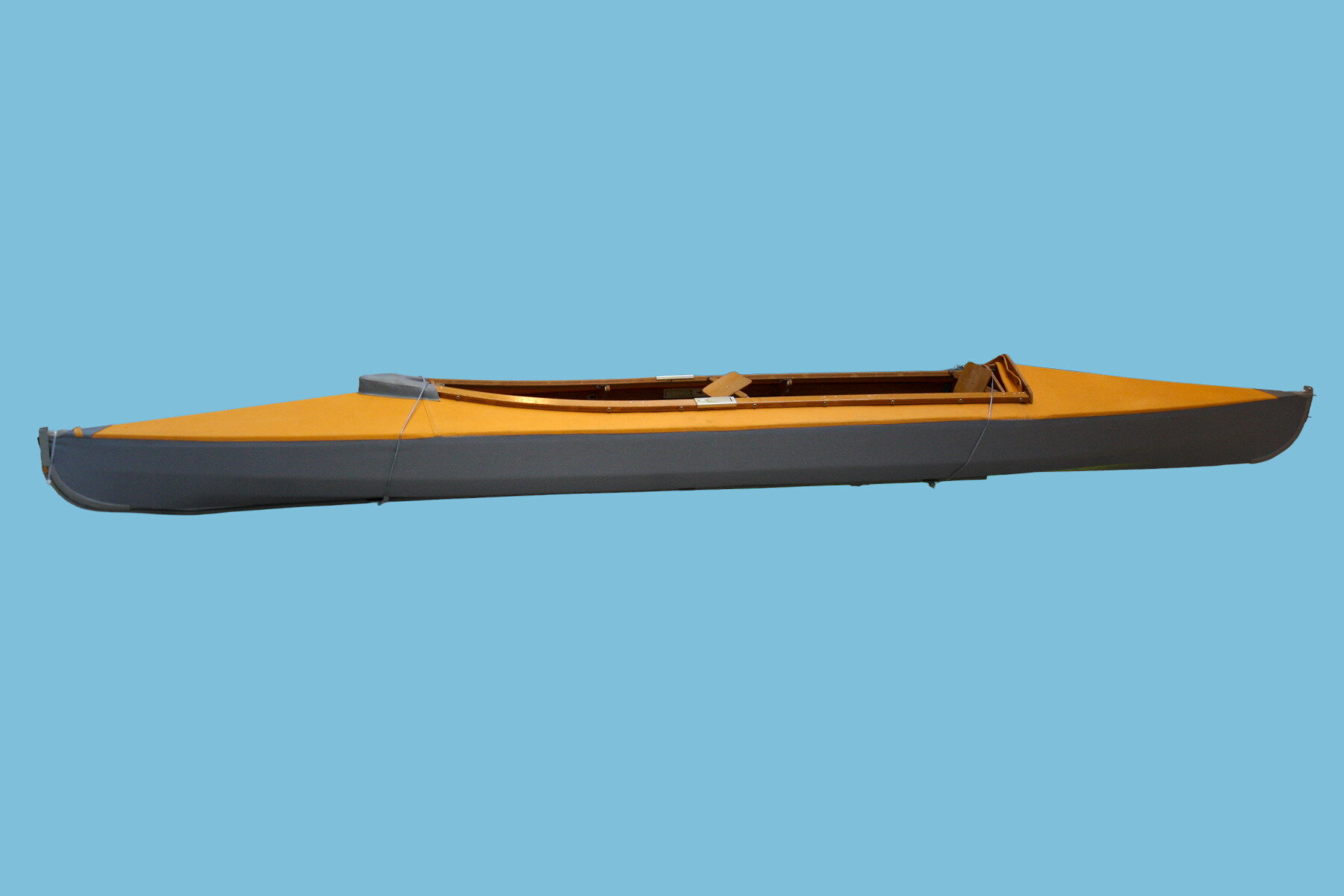
Object of the Month – August 2026
Kolibri III Folding Kayak
Fittingly for the holiday season, our Object of the Month for August is the Kolibri III folding kayak. "Big Ships – Small Boats"—so ran the headline of the shipyard newspaper "Kompass" on 18 August 1989. Alongside ocean liners built for the world's seas, tens of thousands of folding kayaks were produced at the Mathias-Thesen-Werft in Wismar between 1954 and 1990 as part of consumer goods production. By 1988 alone, around 77,670 units had been manufactured, including 40,670 two-seater kayaks like this one. The most widespread were the models in the "Kolibri" series, which were renowned for their low weight, compact pack size, and extremely easy handling. The "Kolibri 3" remained in production for over two decades—partly outsourced to Otto Thiele KG, which was expropriated in 1972 and became the state-owned VEB Leipziger Faltbootbau.
The model pictured showcases a true curiosity of this Baltic Sea classic. Typically, red, blue, or green skins dominated the waterways. However, the bright yellow deck of this particular craft is a direct result of the East German economy of scarcity: because the standard colours were simply unavailable, manufacturers improvised with this vibrant yellow. This resulted in a rare variation of a boat type that continues to enjoy widespread popularity today, far beyond enthusiast circles.
Follow us on Instagram to discover the Object of the Month and many more fascinating stories from the museum.

Object of the Month – July 2026
Passenger Ship "Adzhariya"
Our Object of the Month for July is the passenger ship "Adzhariya", built by the Mathias Thesen Shipyard in Wismar. The shipyard initially operated as a repair yard. Following the construction of slipways and a cable crane in 1952/53, new shipbuilding also became possible. This included passenger ships, which became the shipyard's flagship products. Initially, inland passenger vessels, known as "Bifa" for short, with space for 368 passengers, were built for the Soviet Union. The first ship, the "V. Chkalov", was launched on 18 July 1953 and delivered on 30 March 1954.
Alongside the inland passenger vessels, seagoing passenger ships were also produced. These were known as "small Seefa" or "Seefa 340", as they were designed for around 340 passengers. The first of these ships, the "Mikhail Kalinin", was launched on 25 May 1957 and delivered to the shipping company on 14 July 1958. This model represents the last of nineteen ships in the series, the "Adzhariya". She was launched on 30 November 1963 and delivered to the shipping company on 30 June 1964.
The ship was named after the Georgian Black Sea region of Adjara. The "Adzhariya"'s home port was Odessa. The ship sailed initially under the Soviet flag and, until she was scrapped in 1996, under the Ukrainian flag.
The "Adzhariya" was 122.15 m long, 16 m wide, and had a height to the main deck of 7.60 m. Her draught was 5.10 m. The ship had a volume of 5,261 GRT (around 15,000 cubic metres) and space for 314 passengers and 118 crew members. She had two restaurants, three lounges, a bar and a library. The diesel engines, built by VEB Dieselmotorenwerk Rostock under licence from MAN, produced an output of 8,000 hp (5,884 kW). Her speed was 14 knots, around 26 km/h. The ship's range was 4,200 nautical miles, equivalent to around 7,600 kilometres. The ship model was probably made by the Mathias Thesen Shipyard itself. Its previous owner, Hans Haase, who worked at the Wismar shipyard from 1967 to 2017, acquired it at a flea market in Rostock and restored it. The Technische Landesmuseum MV was able to acquire the model in 2023, together with two other ship models.
Follow us on Instagram to discover the Object of the Month and many more fascinating stories from the museum.


Object of the Month – June 2026
Simson KR 50
Our Object of the Month for June is the Simson KR 50, which also happens to be our Object of the Summer! It is currently on display in our new exhibition "Object of the Season!" With this new format, we are shining a spotlight for one season at a time on treasures from our store, archives, or library that would otherwise remain hidden.
After all, museums operate on the "iceberg principle": alongside exhibiting and education, our core duties include collecting, researching, and preserving in order to bring technological and industrial history to life.
A Piece of Two-Wheeled History
Dating back to 1963, the KR 50 was the first small scooter produced in the GDR. Between 1958 and 1964, a total of 164,500 units were built by the state-owned enterprise Simson Suhl. Unlike its legendary successor produced from 1964 onwards – the famous Schwalbe, or Swallow, from the Simson bird series – the KR 50 was strictly a single-seater.
The history of the manufacturer Simson dates back to 1856. Following a turbulent and tragic history, marked by the expropriation of its Jewish founding family under the Nazi regime and its later conversion into a state-owned enterprise, the factory focused entirely on two-wheelers from 1962. While these vehicles still enjoy cult status today, the brand unfortunately did not survive the post-reunification era in the long run; production came to a final end in 2002.
Become part of our museum summer!
Because your personal connection, knowledge, and memories are incredibly important to us, we would love for you to get involved. Whether it's your first holiday by the Baltic Sea or experiences from your everyday working life – share your personal story with us and our other visitors on our noticeboard in the exhibition.
How to take part:
Email your memory, including a photo and text, to pr@phantechnikum.de
Alternatively, send it via Instagram to @tlm.mv
We will print out your contribution and pin it right up on the board in the museum.
Find more details about the exhibition here!

Object of the Month – May 2026
Lighthouse Bulb
The Mecklenburg coast is treacherous. Shallow waters, shifting sandbanks and narrow channels have made precise maritime lighting essential since the 19th century. Our Object of the Month is the glowing heart of the Buk Lighthouse (Bastorf) and a technical powerhouse: a 1,000-watt special-purpose bulb. While a standard household bulb requires only a fraction of this energy, this lamp is designed for extreme conditions and maximum visibility – serving as a navigational light and a warning signal for the "Hannibal" sandbank at the entrance to Wismar Bay.
The Buk Lighthouse possesses a unique characteristic: at only 20.8 metres tall, it is one of Germany’s shortest lighthouses, yet it stands atop the 78.8-metre-high Bastorf Signalberg. Consequently, the tower, built in 1878, boasts a focal height of 95.3 metres, making it the highest lighthouse in Northern Germany – even surpassing the Dornbusch Lighthouse on the island of Hiddensee (95 m).
Following a planning phase spanning decades, the Buk Lighthouse was erected on the Buster Berg between 1877 and 1878, and its paraffin-wick system was converted to electric operation in 1925. Although the tower was classified as a restricted military site during the GDR era, it has been open to the public again since 1990 and now serves as a viewpoint and radio station. A particular technical feature is the original Fresnel lens from 1878, which remains in full use today despite wartime damage to the glass; following a regrouping of the lenses, it now displays a distinctive four-flash character. Today, the red-brick ensemble is a protected monument maintained by the Baltic Sea Waterways and Shipping Office.
Follow us on Instagram to discover the Object of the Month and many more fascinating stories from the museum.


Special Showcase for the Junior.ING School Competition
The phanTECHNIKUM is becoming a stage for young engineering talent: from 25 March to 8 May 2026, we are presenting the special exhibition “Arena – Well Covered” as part of the nationwide Junior.ING school competition, organised by the Chamber of Engineers of Mecklenburg-Vorpommern. This is the first time Mecklenburg-Vorpommern is taking part – and with impressive ideas: around 60 models created by school pupils from across the region will be on display.
Their task: to design a roof structure for an open-air arena and realise it as a load-bearing model. Creativity, technical skill and structural stability were essential, as the constructions had to withstand stress tests.
Visitors to the exhibition can vote for their favourite design and thus become part of the jury themselves.
The highlight follows on 8 May 2026 with the state award ceremony at the phanTECHNIKUM. This is when it will be decided which projects will represent Mecklenburg-Vorpommern at the national final in Berlin.
Further details about the competition and the exhibition can be found here.
Photo: Allgäuer Freilichtbühne Altusried, cantilevered wooden roof of a grandstand for 2,500 guests
© Allgäuer Freilichtbühne Altusried GmbH


Object of the Month – March 2026
Model of Greifswald / Lubmin Nuclear Power Plant
The model was on display from 1966 to 1992 at the Polytechnical Museum in Schwerin, the predecessor of the phanTECHNIKUM. Construction of the Greifswald-Lubmin Nuclear Power Plant began in 1967, following the Rheinsberg plant (1966), making it the second nuclear power station in the GDR. Four reactor blocks were commissioned between 1974 and 1980, at times supplying around 10% of the GDR’s electricity. Unlike the model, the reactors had flat ceilings rather than domes.
During the 1960s and 1970s, nuclear power was regarded in both East and West as a safe and clean source of energy. It was only after major reactor accidents – in Harrisburg (1979), Chernobyl (1986) and Fukushima (2011) – that it became clear the risks of nuclear power are difficult to control, with the potential for long-term radioactive contamination of large regions.
By the late 1980s, blocks 1 to 4 were no longer safe to operate. The steel of the reactor pressure vessels had become brittle due to continuous neutron irradiation, and the safety systems were outdated. For this reason, construction of a more modern reactor, Block 5, began as early as 1977; it was only in operation from March to November 1989. Block 6 was completed in 1989 but was never loaded with fuel rods, and is therefore safe to visit today. The final reactor block was shut down in 1990.
Follow us on Instagram to discover the Object of the Month and many more fascinating stories from the museum.


Object of the Month – February 2026
The "Machine Temple"
A temple? – No, a steam engine! The “Machine Temple” is returning to Mecklenburg. This high-pressure steam engine, built in 1839 in Güstrow, powered textile machinery at the cloth factory in Plau am See until 1900. It was subsequently transferred to the Deutsches Museum in Munich, where it remained on permanent display until 2023. The “Machine Temple” has now returned to the Burgmuseum in Plau am See on loan and will be open to visitors there from April onwards. At the phanTECHNIKUM, visitors can see the steam engine’s smaller sister – a 1:4 scale replica built in 1995.
The designer Ernst Alban was a man of many talents. He was born on 7 February 1791 in Neubrandenburg and died on 13 June 1856 in Plau am See. Alban initially studied medicine and practised as an ophthalmologist in Rostock. His true passion, however, lay in mechanical engineering. In 1829 he founded a mechanical engineering works in Stubbendorf. Subsequently, he designed agricultural equipment, textile machinery and steam engines – at times in his own factories in Stubbendorf and Plau, and at other times as technical director in Güstrow, where the “Machine Temple” was created. In 1845, the first steamship for the lakes of Mecklenburg, the “Alban”, was also built at the Ernst Alban engineering works in Plau.
Follow us on Instagram to discover the Object of the Month and many more fascinating stories from the museum.


Object of the Month – January 2026
Ventilett Flush Cistern with Fan
This cast-iron flush cistern is on display in the permanent exhibition at the phanTECHNIKUM.
It combines a water-flush system with a fan that was intended to carry unpleasant toilet smells outside. This unusual yet practical invention was developed by the Ventilett Company in Hanover. The cistern was in use in Wismar’s historic old town until 1980. The modern toilet was developed in Great Britain in the 19th century. In Germany, the first toilets were installed in 1818 at Bad Homburg Palace and in 1861 at Ehrenburg Palace in Coburg. Their wider use depended on the construction of sewer systems.
Wismar’s first sewer system was built between 1868 and 1875. At that time, it was mainly used to remove wastewater and keep the streets clean; toilets were not yet connected. From 1903 onwards, so-called pail systems were used, in which toilet waste was collected in sealed containers. Construction of a water-based sewer system began in 1913 but was interrupted by the First World War. In 1931, the city of Wismar opened its first wastewater treatment plant at Koggenoor. It was replaced in 1955 by the Wendorf treatment plant, which is still in operation today.
Today, Wismar has a sewer network stretching over 321 kilometres, with some sections more than 100 years old. On dry days, around 9,000 cubic metres of wastewater are produced; on rainy days, this can rise to up to 20,000 cubic metres. About 10,000 cubic metres of treated water are discharged into the Baltic Sea every day.
Follow us on Instagram to discover the Object of the Month and many more fascinating stories from the museum.


FOKUS:INNOAVTION - The digital exhibition is now online!
Digital exhibition on regional technology and sustainability
With the new FOKUS:INNOVATION exhibition area, the phanTECHNIKUM will be expanding its offering with a digital experience space from 2024. The aim is to make current technical developments from the region visible and accessible - in an innovative way: The exhibition is largely designed digitally and is now accessible online for everyone.
The first thematic focus is dedicated to the sustainable production of insulating materials made from seagrass - a pioneering approach by the company Build Blue from Mecklenburg-Vorpommern. Here, historical technology meets modern solutions for global challenges such as sustainability and climate change.
Supported by the German Foundation for Commitment and Volunteering, the project invites you to think, discuss and develop further.
Experience FOKUS:INNOVATION online now - and discover what technology can achieve in Mecklenburg-Vorpommern.

"Cultural Monument of the Month" - A look at Cultural Heritage 2025
The year 2025 is all about cultural heritage, and the Technical State Museum MV - phanTECHNIKUM is proud to support the "Cultural Heritage of the Year 2025" campaign as a cooperation partner. This year's focus is on the topic of “Landscape and Energy”, which was launched by the Bund Heimat und Umwelt in Deutschland (BHU) together with its member associations.
The campaign aims to draw attention to important cultural landscapes worthy of protection, which include both tangible and intangible elements. These include the numerous traditions and techniques that have contributed to the development and use of energy sources over generations. These range from the historical use of firewood in forests to the highly visible wind farms of today.
Cultural heritage “Landscape and energy”: a historical perspective
Historical energy landscapes are often closely linked to developments in energy production and use. In the Middle Ages, for example, the intensive use of wood shaped the landscape, and charcoal pits and coal roads still bear witness to this era today. However, the use of water as a source of energy in the form of watermills along streams and rivers was and is of central importance for industrial development, especially between the 16th and 18th centuries.
With the beginning of the industrial age, fossil fuels such as coal and natural gas came to the fore, bringing with them profound changes to the landscape. Mines, slag heaps and drilling fields are just as much a part of this cultural heritage as the numerous industrial monuments that are still preserved today as witnesses to past industrialization. As part of the campaign, the Heimatverband regularly presents special examples from the interface of “landscape and energy”. These sites are not only of historical significance, but also make a valuable contribution to education and the preservation of our cultural identity. Our aim is to raise awareness of these unique cultural assets and encourage people to take an active role in protecting them.
All results of the initiative as well as further information and publications on the individual monuments are shared on our Instagram channel. All contributions can also be found on the website of the Heimatverband MV.


